Walk down any pharmacy's sleep aisle and you'll see melatonin in nearly every dose imaginable — 1mg, 3mg, 5mg, even 10mg gummies stacked next to each other. It's easy to assume more is simply better. The research and the lived experience of a lot of users suggest it's more complicated than that.
What Melatonin Actually Does
Melatonin is a hormone your pineal gland produces naturally in response to darkness. It doesn't force sleep the way a sedative does — instead, it signals to your body that nighttime has arrived, helping regulate the timing of your sleep-wake cycle. This is why melatonin supplements are often recommended for circadian issues like jet lag or shift work, where the goal is re-timing the body clock, not just falling unconscious faster.
The Case Against High Doses
Here's the counterintuitive part: your body's own nightly melatonin production is typically in the range of 0.1 to 0.3mg. A 5 or 10mg supplement dose can be 20-50 times that amount. Some research suggests that once you're past a certain threshold, more melatonin doesn't necessarily improve sleep onset or quality — it may just increase the odds of grogginess, vivid dreams, or a lingering foggy feeling the next morning, particularly in older adults whose metabolism processes it more slowly.
The Low-Dose-Plus-Botanicals Approach
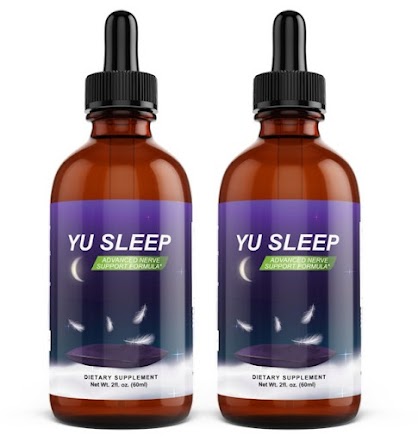
An alternative formulation strategy — the one YuSleep uses, dosed at 0.9mg — pairs a smaller melatonin amount with a broader blend of supporting ingredients: B-vitamins involved in the body's own melatonin production, magnesium for relaxation, and calming botanicals like lemon balm, apigenin, L-theanine, and GABA. The theory here is that instead of one ingredient doing all the work at a high dose, several ingredients contribute smaller supporting effects that add up — with the goal of a gentler, less groggy experience.
This approach won't be as immediately noticeable as a strong sedating dose for some people, and that's a legitimate trade-off to weigh. It generally takes longer — weeks rather than a single night — to assess whether it's making a difference for you.
What to Look For on a Label
If you're comparing sleep supplements, a few label details are worth checking regardless of which approach you lean toward:
- The actual melatonin dose in milligrams — not just "with melatonin," but the specific number.
- Whether other ingredients are individually dosed or combined into a "proprietary blend" — individual dosing gives you more information, though blends are extremely common.
- Whether the product discloses inactive ingredients — fillers, sweeteners, and preservatives should be listed too.
- Third-party testing or GMP manufacturing claims — these speak to quality control, not effectiveness, but they matter.
- An FDA disclaimer — its presence is a basic sign the company understands regulatory requirements around supplement marketing.
Which Approach Is Right for You?
If you've tried high-dose melatonin and it worked well without side effects, there may be little reason to switch. But if you've noticed grogginess, vivid dreams, or a foggy next morning after taking melatonin gummies, a lower-dose formula with supporting botanicals is a reasonable alternative to try — with the understanding that it's a gentler, more gradual approach rather than a fast, forceful one. As always, if sleep issues are persistent or severe, that's a conversation for your doctor, not a supplement label.
Timing and Tolerance Considerations
One often-overlooked factor in the melatonin conversation is timing. Melatonin taken too early or too late relative to your natural circadian rhythm can actually shift your body clock in an unintended direction rather than simply making you sleepy — this is part of why melatonin is used therapeutically for jet lag, where the timing of the dose relative to your destination's time zone matters as much as the dose itself. For everyday sleep support, taking any melatonin product at a consistent time each night — roughly 30-60 minutes before your intended bedtime — tends to produce more predictable results than taking it at varying times.
There's also an open question in the research community about whether nightly melatonin use, at any dose, can lead to reduced sensitivity over time — sometimes called tolerance. The evidence here is mixed and not fully settled, but it's part of the reasoning some formulators use for favoring a lower baseline dose: it leaves more room before you'd need to increase the amount to achieve the same effect, compared to starting at an already-high dose.
Looking Beyond Melatonin Entirely
It's worth remembering that melatonin is only one lever among many. Sleep hygiene fundamentals — consistent timing, light management, a cool dark room, limited late-day caffeine — often produce a bigger overall effect than any single supplement, melatonin included. The most effective approach for most people combines solid sleep hygiene with whichever supplement strategy (high-dose, low-dose, or none at all) fits their personal history with side effects and their comfort with a faster versus more gradual approach.
A Final Word on Reading Labels Critically
Whichever approach you land on, the most useful skill is reading a supplement label the way you'd read a nutrition label — looking past the front-of-bottle marketing claims to the actual supplement facts panel. A specific milligram number for melatonin, clear disclosure of other actives, and honest inactive-ingredient listing are all signs of a company willing to let the product speak for itself rather than relying purely on the copy around it.
Why Individual Response Varies So Much
Anecdotally, melatonin response varies enormously between individuals — some people report vivid effects from 0.5mg, while others feel nothing from 5mg. Genetic differences in melatonin receptor sensitivity, individual metabolism speed, body weight, age, and even the time of day a dose is taken all contribute to this variation. This is part of why dosing guidance in this category tends to be broad ranges rather than a single universal number, and why "start low and see how your body responds" is generally more useful advice than defaulting to whatever dose happens to be most heavily marketed.
A Note on Combination Products Generally
YuSleep's approach — a lower melatonin dose paired with a broader supporting blend — reflects a wider trend in the sleep-supplement category toward combination formulas rather than single-ingredient products. The rationale is that sleep is a multi-system process (hormonal, neurological, and behavioral), so a product addressing multiple pathways simultaneously may have a more rounded effect than maximizing any single one. The trade-off, as discussed throughout this article, is that combination formulas make it harder to isolate which specific ingredient is responsible for any effect you notice — useful to keep in mind if you ever want to troubleshoot what is or isn't working for you.
Genetics and Individual Metabolism
Research into the CYP1A2 enzyme, which plays a role in melatonin clearance, has identified genetic variations that cause some people to metabolize melatonin considerably faster or slower than others. This is one biological explanation for why the same dose can feel strong for one person and barely noticeable for another, and it's part of why broad dosing guidance in this category tends to favor ranges over a single fixed number. If you've had wildly different experiences with melatonin than a friend or family member at the same dose, genetics may be part of the explanation.
A Closing Thought on Dose Versus Consistency
It's easy to fixate on the specific milligram number as the deciding factor between products, but consistency of use — taking a chosen product at the same time nightly, alongside solid sleep hygiene — often matters more than whether the dose is 0.9mg or 5mg. Dose selection is a meaningful variable, particularly for side-effect sensitivity, but it works best as one part of a broader, consistent approach rather than the single lever expected to fix sleep on its own.